Duration
4 days / 3 nights
Exit
Punta Arenas
Cluster
8-12 passengers
Difficulty
Expedition / Navigation
Accommodation
Shared on board
Francisco Coloane Marine Park and Fuegian Andes
Punta Arenas — Magdalena Channel — Cockburn Channel —
Agostini Sound — Carlos III Island
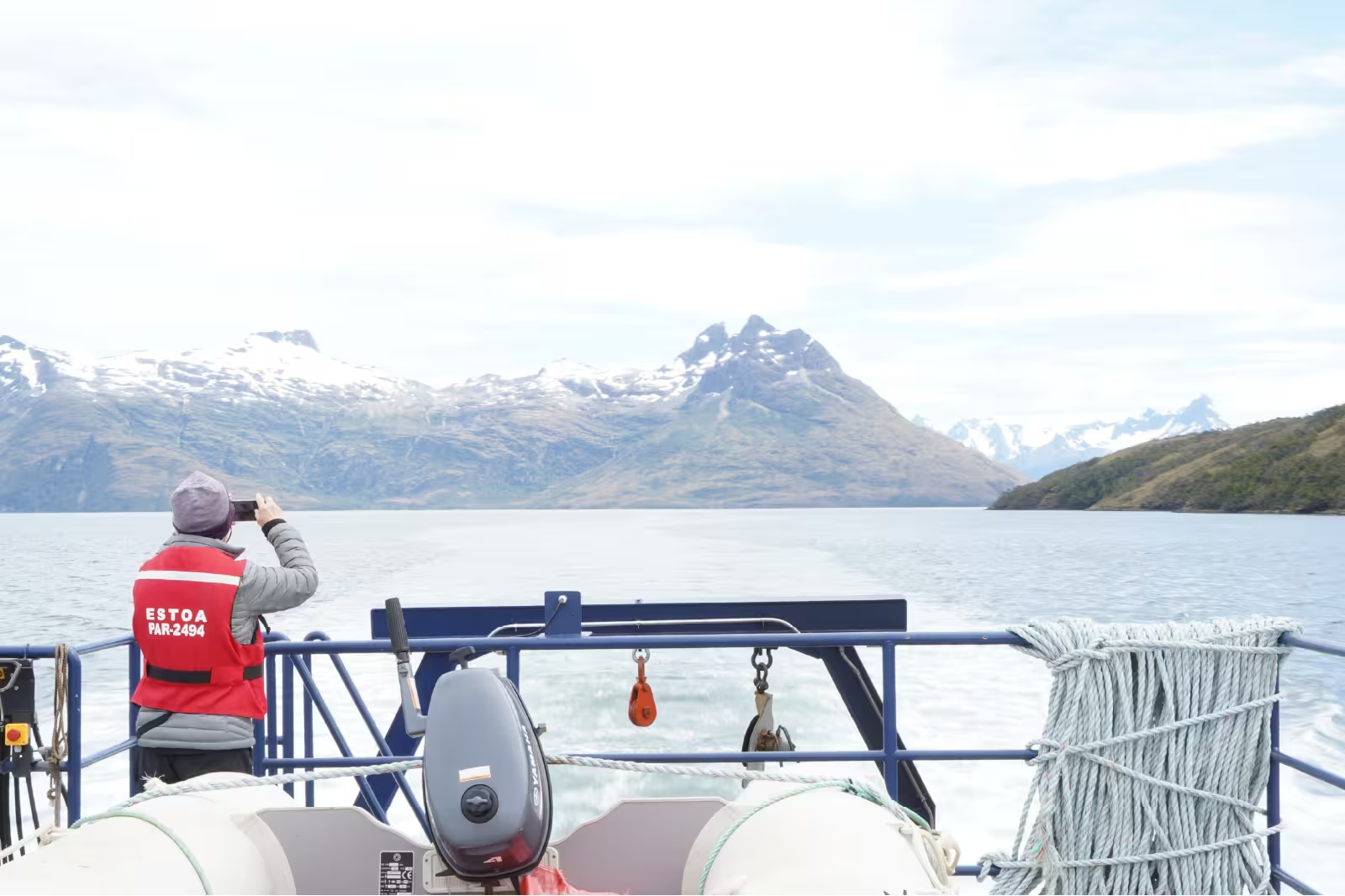
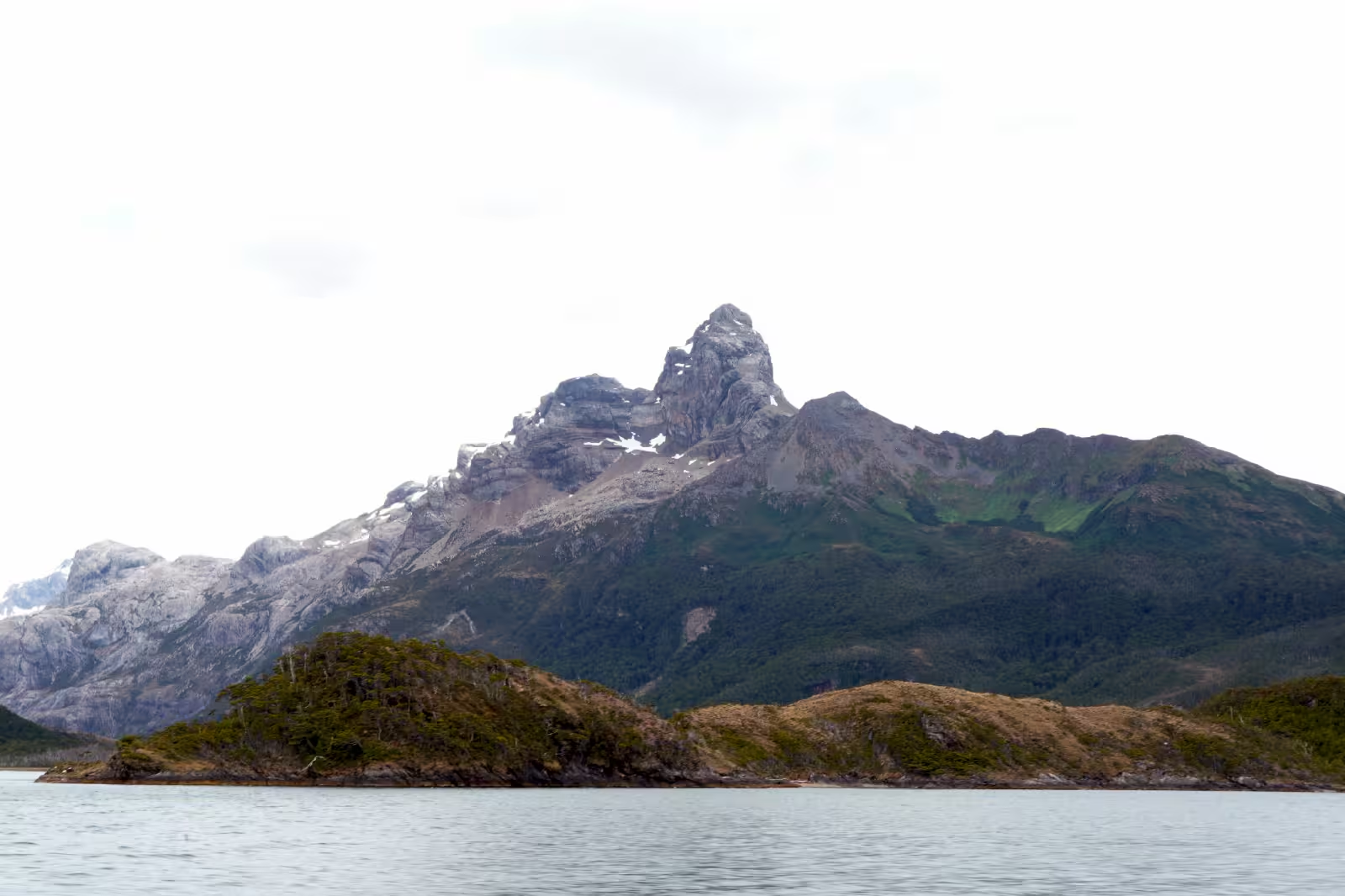
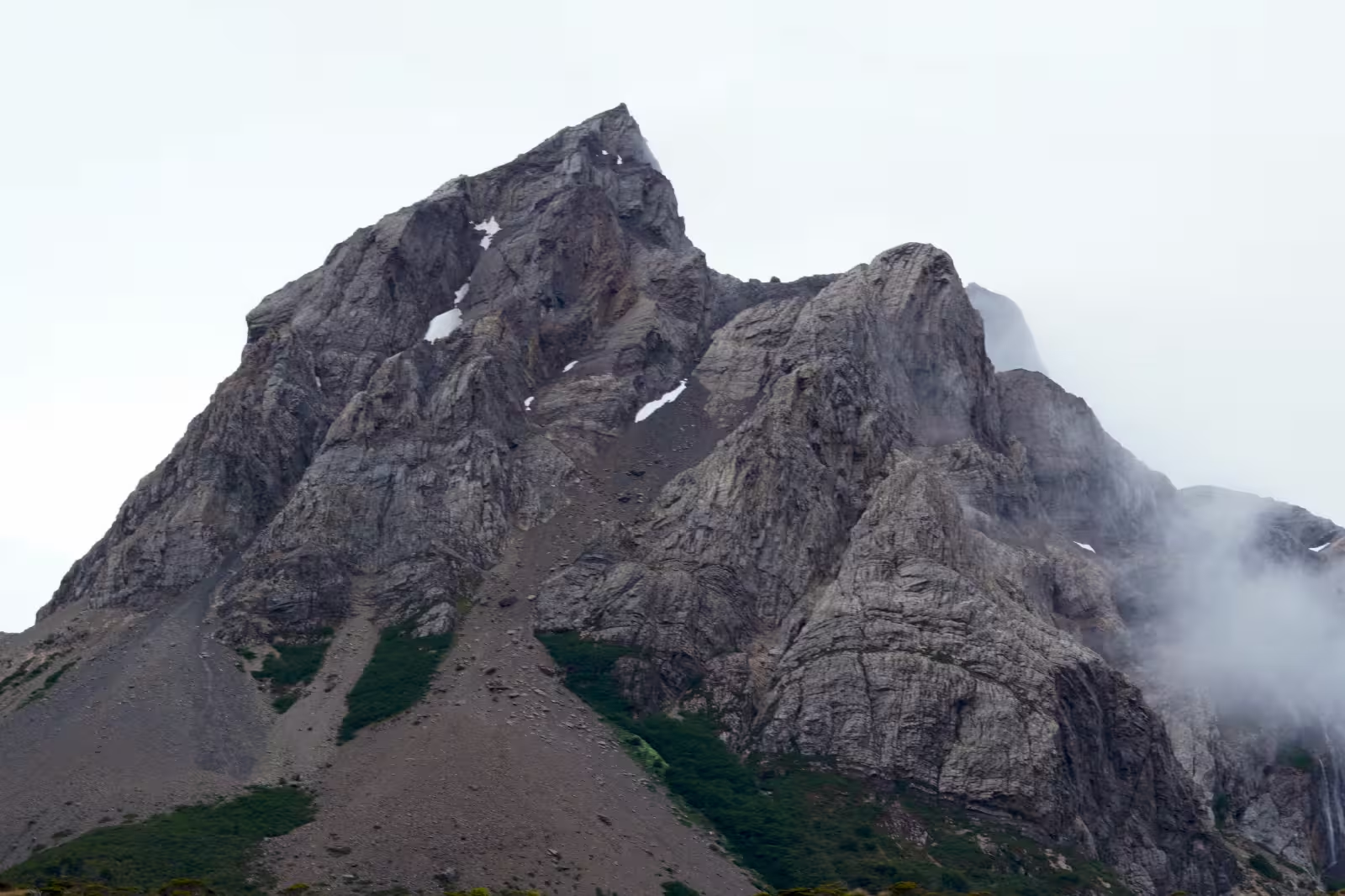
This route traverses the only place on the planet where a mass of rock and ice over two thousand meters high rises a few kilometers from the seashore, and where the only way to reach it is by boat. There are no trails, no inhabitants. Only channels.
Anyone who wanted to reach Mount Sarmiento—canoeist, sailor, missionary, mountaineer, researcher—first had to sail: the sea is the route.
Punta Arenas
Start
Magdalena Canal
The wall
Cockburn Canal
The source of fire
Carlos III Island
Navigation
Punta Arenas
Return
DAY 1 — THE PATH FOR EVERYONE
Punta Arenas → Magdalena Channel
Before setting sail, a look on land: in the Maggiorino Borgatello Museum and the Salesian archive of Punta Arenas is the other side of everything you will see at sea — plate photographs, negatives, canoeing objects collected by the missionaries.
The route's name is also explained here: “Ice Sphinx” is not our poetic license, but the name that the explorer Alberto De Agostini gave to Mount Sarmiento, and the title of his 1958 book., Sfingi di ghiaccio.
We set sail south. We pass Fort Bulnes, round Cape Froward—the southernmost point of the continent—and the Strait becomes serious: it's the same route used by Magellan, privateers, whalers, and the steamships of the 19th century. From here, the route leaves the main road and enters the labyrinth of channels toward the Magdalena Channel.
Night on the Magdalena Canal.
DAY 2 — THE WALL
Magdalena Canal
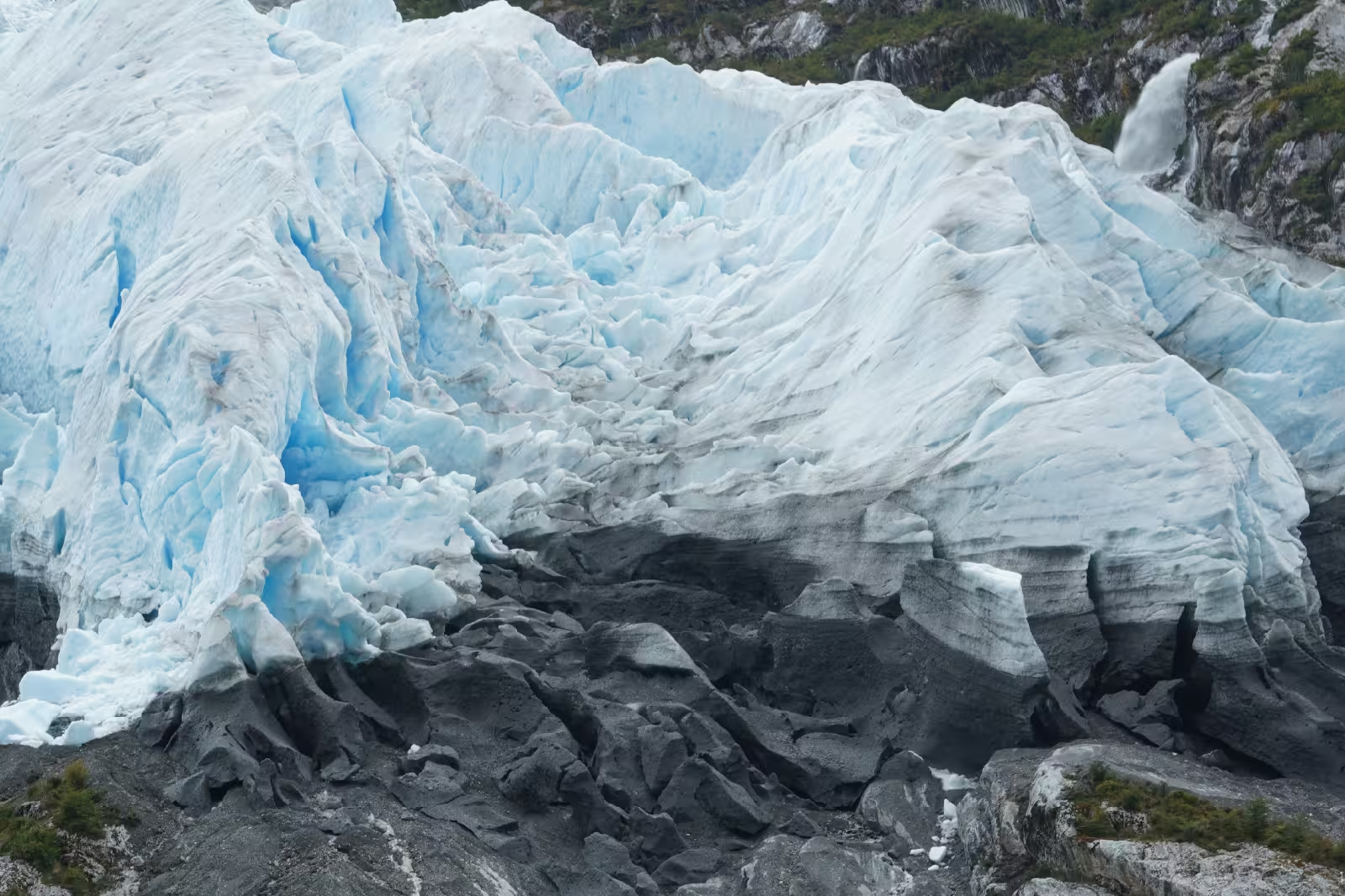
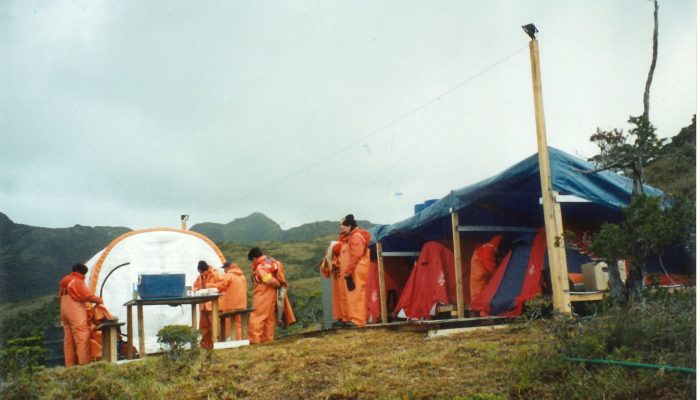
We wake up facing the eastern shore of the channel, a wall where the branches of the Darwin mountain range end and the glaciers that descend from the Sarmiento River flow into it.. We arrived at Caleta Schiaparelli, the focal point of the entire trip: here De Agostini set up camp in 1913, returned in 1914, and in 1956 —leading the expedition from below at the age of 73— Carlo Mauri and Clemente Maffei finally reached the eastern summit of Sarmiento.
On the same beach there are a much older and less written history: remains of a canoe camp in front of the glacier, an unexcavated archaeological site. It is a real find, but also a fragile and unprotected area—it can be looked at, but not touched, and its exact location is not marked. The glacier itself tells a third story: De Agostini drew it attached to its moraines in 1913; today, a century later, there is a lagoon where there was once ice.
Night on the Magdalena Canal.
DAY 3 — THE SOURCE OF FIRE
Cockburn Canal → Agostini Sinus
The route turns 180°. After two days in the mountains, the protagonist is a mineral: pyrite. It was used to make fire — the same fires that Magellan saw from the sea and that gave the whole island its name came from, among other places, deposits such as Staples Bay, in Mercury Sound.
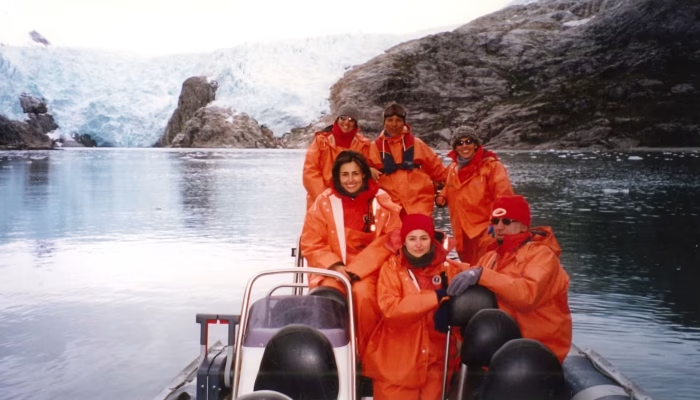
We continue towards the Agostini Sound, the scenic heart of the trip: the glaciers that descend from the center of the Darwin mountain range to the sea, including the Eagle and the Condor.
Here, in the early 1930s, aviator Günther Plüschow flew over and filmed these mountains—the first time anyone had seen them in their entirety, from above, without having hiked them. A fjord and a glacier now bear his name.
Night in the Bosom of Agostini.
DAY 4 — THE RETURN
Carlos III Island → Punta Arenas
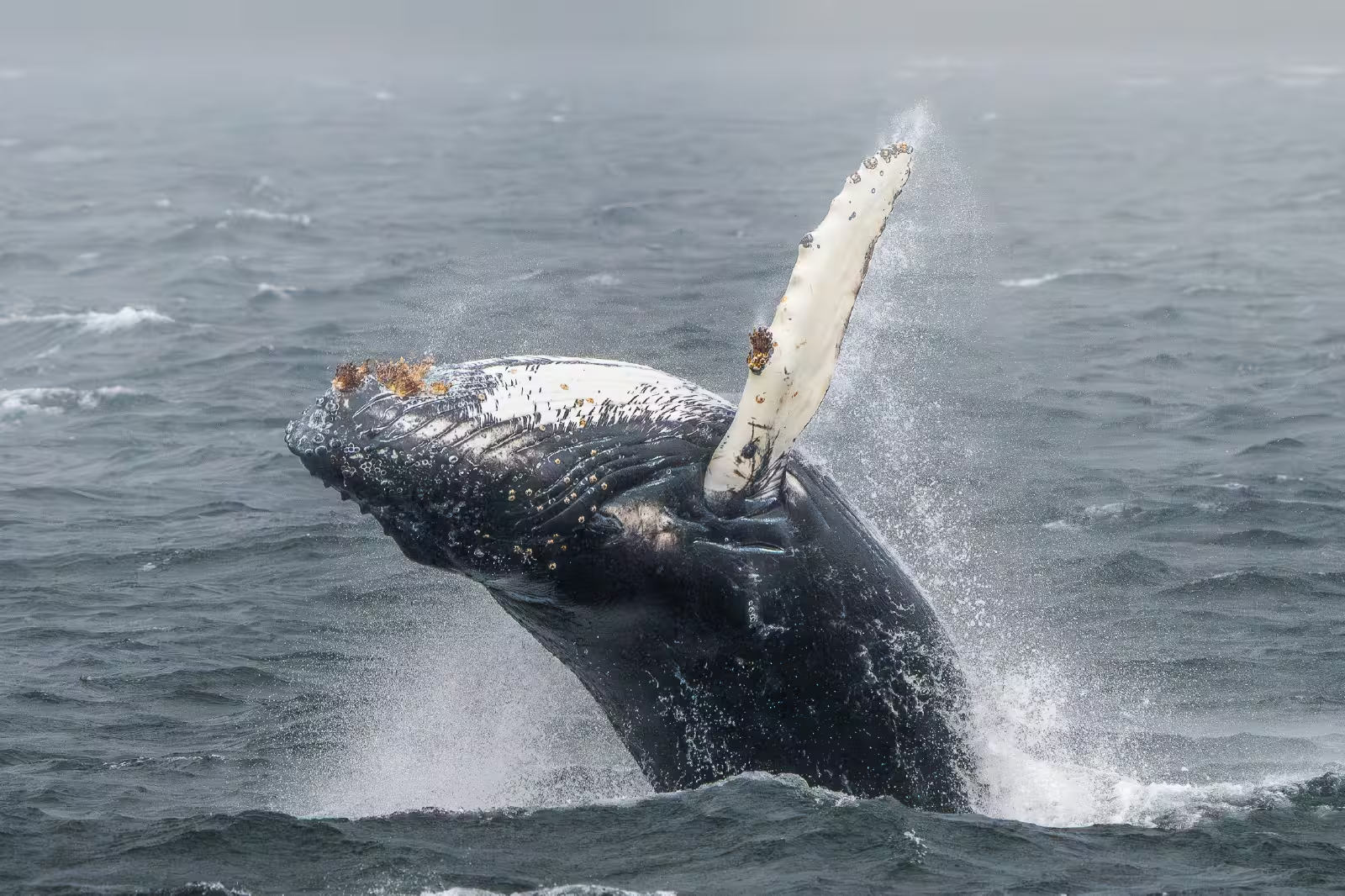
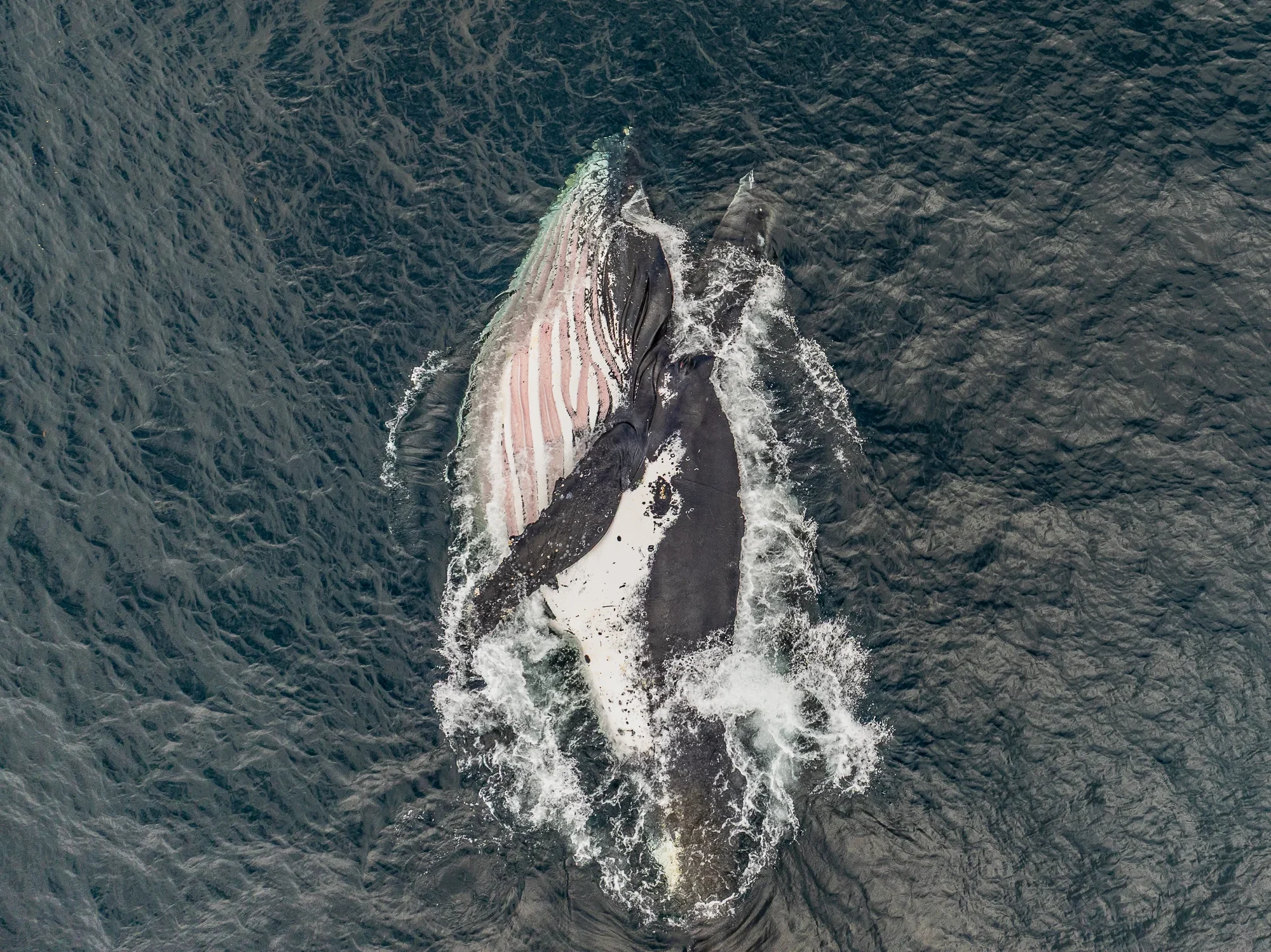
Back in the Strait, The route ends at Francisco Coloane Marine Park, Chile's first marine park., Created in 2003 around Carlos III Island. Here, between December and April, humpback whales arrive at the only known feeding site for the species in the Strait.
It makes narrative sense, not just logistical sense: The entire route was made up of people who came to this sea in search of something — a summit, a soul to convert, a pyrite deposit. The last point is about something that comes on its own, every summer, without having come looking for anything.
I'm returning to Punta Arenas.
- Accommodation conditions and cabin configuration depend on the size of the group.
Main attractions
Mount Sarmiento and the history of its conquest (De Agostini, Mauri, Maffei)
Navigation through virtually unexplored channels of the Darwin mountain range
The origin of the name "Tierra del Fuego": the pyrite deposits of the Cockburn Channel
Archaeological remains of canoeists more than a century old
Closing at the Francisco Coloane Marine Park, with humpback whales
Important
This is a expedition in remote territory. Weather and sea conditions may alter the itinerary, sailing times, and places visited.
Wildlife observation depends on natural conditions and cannot be guaranteed.
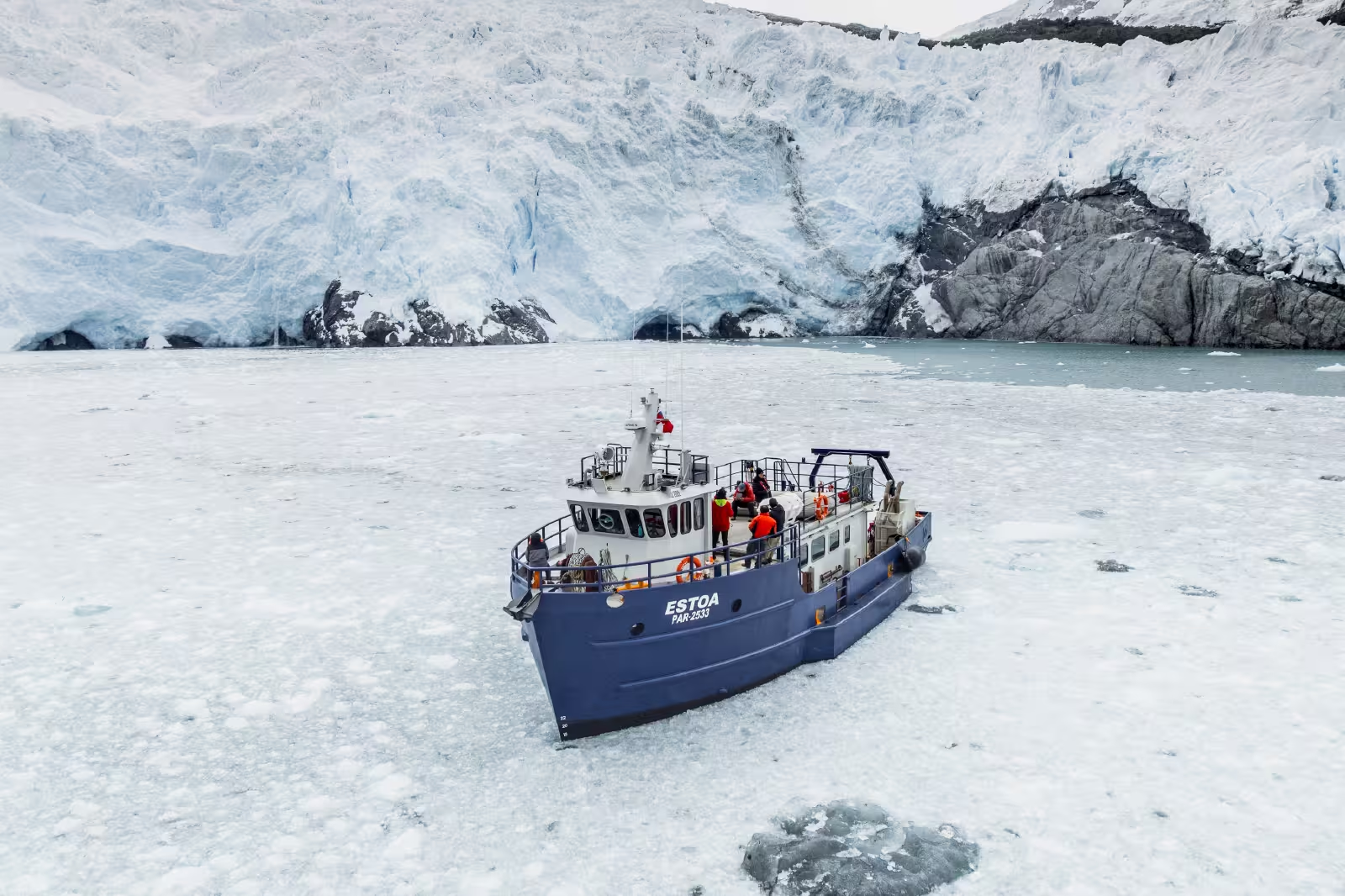
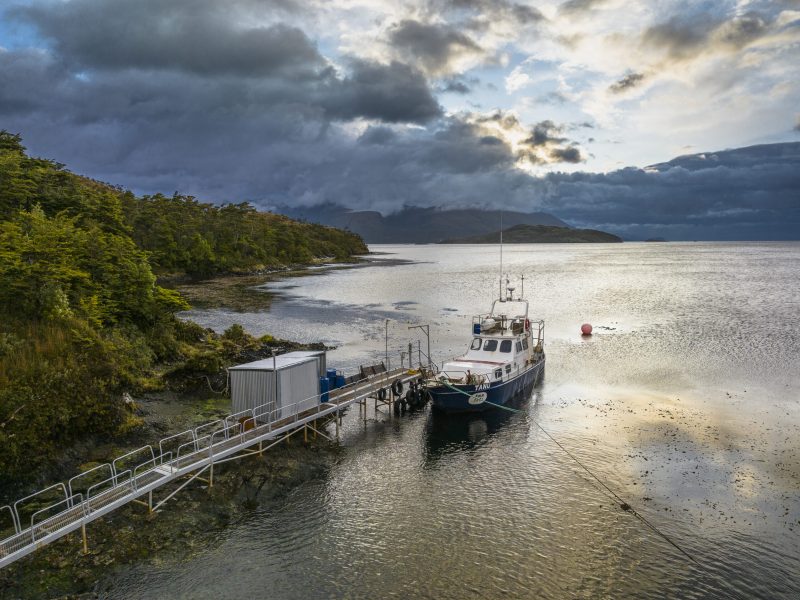
Estoa
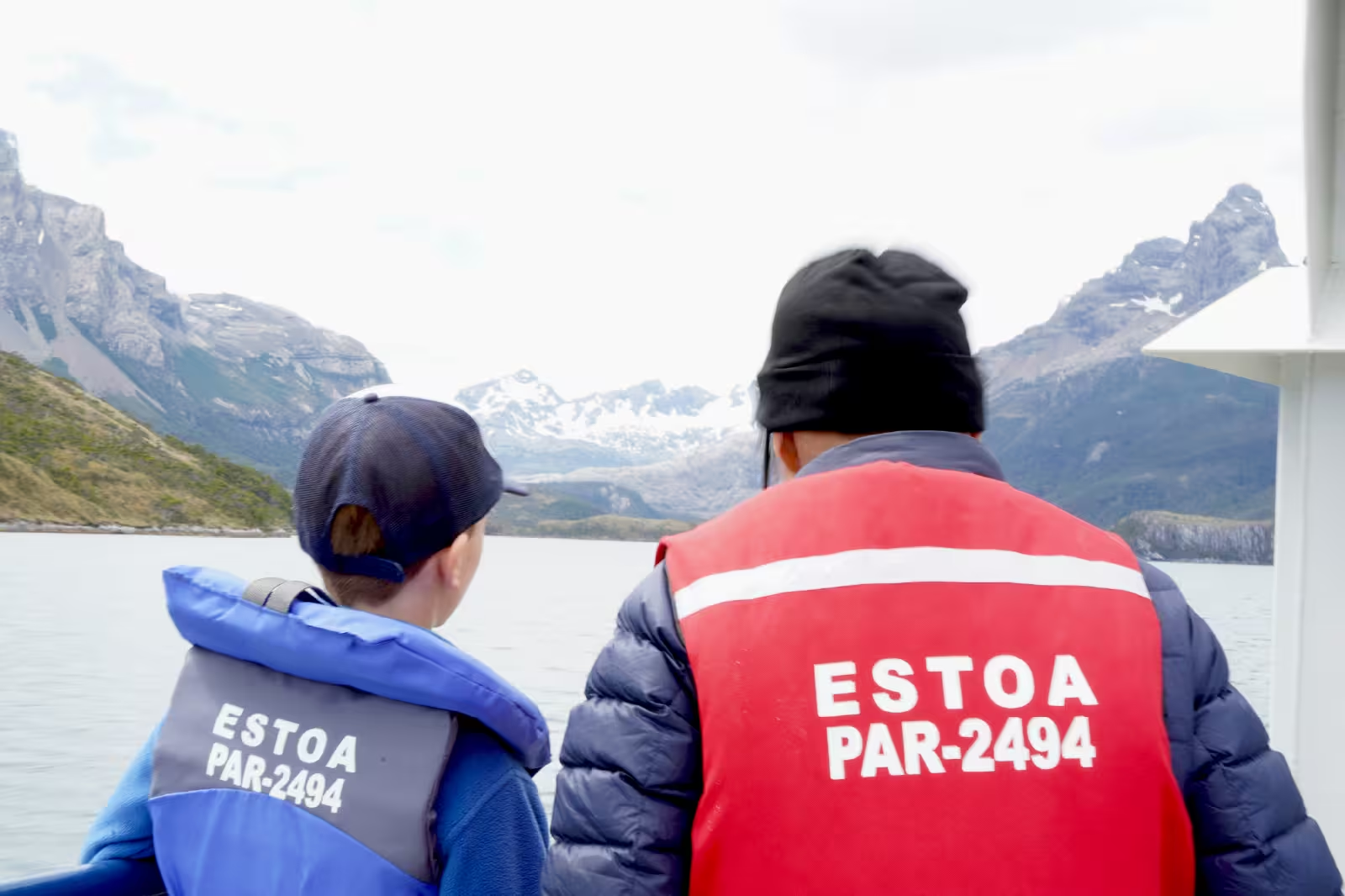
Our new addition to the team, a 19-meter-long boat with a lounge for more than 30 square meters which will provide comfort for our new and more extensive navigation routes.
Characteristics
Overall length: 19.35 MTS
covered Length: 18.50 MTS
Maximum beam: 6.00 MTS
Average deaph: 2,575 m
Passengers: 30 daytime, 12 overnight
Life raft: for 50 Persons
Speed: 10 knots